

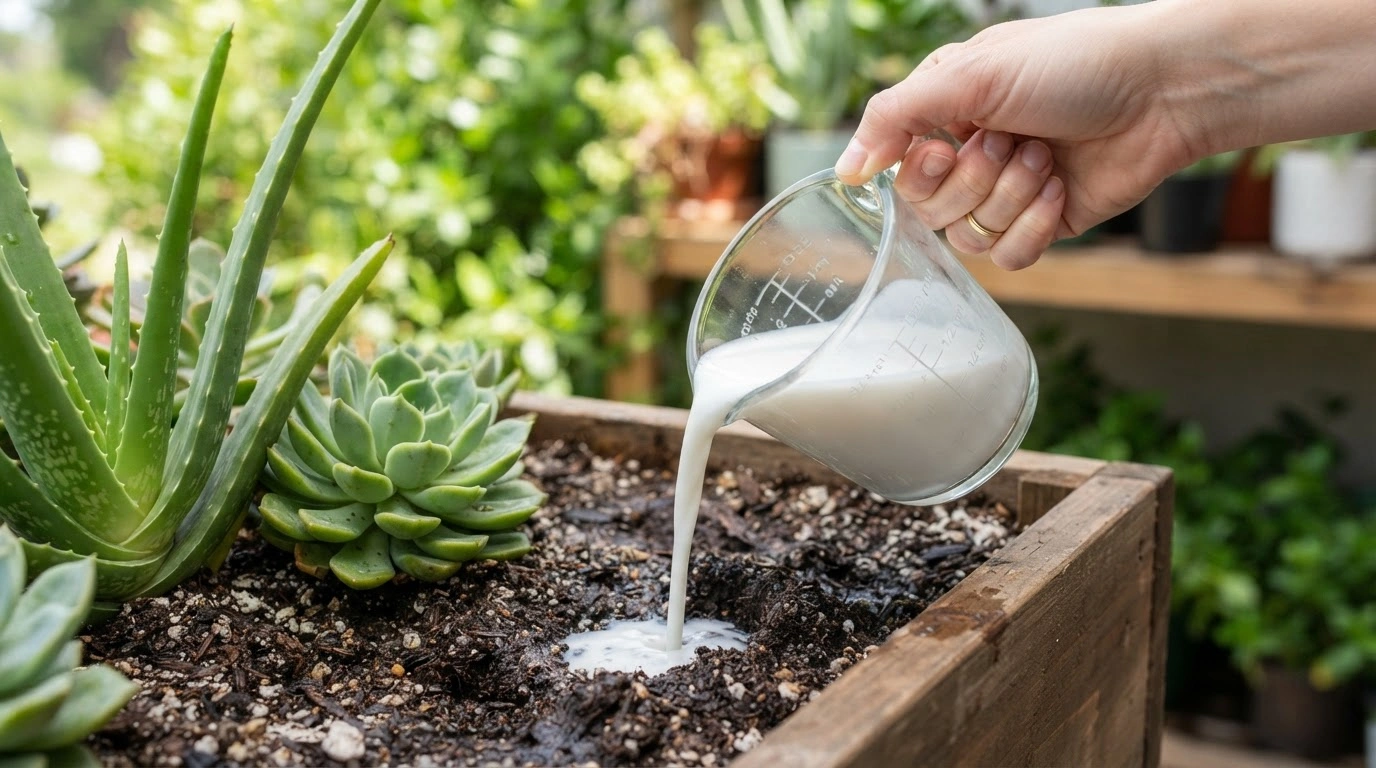
What do you usually do when you have leftover or expired milk in your refrigerator? What if you could use it in your garden instead of pouring it down the drain? Yes, you can pour this leftover milk on your plants to boost their growth in your garden. Milk is one of the most nutritious beverages for humans. Similarly, it benefits plants because of nutrients like calcium. This white liquid acts as a fertilizer and an activator for your plants. However, you need to know how much milk to use and how to apply it to get the most benefit.
Is Milk Good for Plants?
When it comes to plant health, milk is one of the most unconventional options. Depending on how you use it, milk can help treat issues like pest infestations and powdery mildew. Many gardening experts consider this calcium-rich liquid to be a great option to fertilize plants to prevent fungal issues and act as a pesticide. Milk can benefit houseplants and garden vegetables when used in diluted form. However, milk benefits your plants only when you use it correctly.
Benefits of Using Milk on Plants
Whether you have cow milk, goat milk, or sheep milk, these organic options are known to show tremendous benefits for the plants in your garden.
Rich in Nutrients
Milk is a rich storehouse of calcium, which is highly beneficial for the plant’s cell structure. It also contains traces of nitrogen and Vitamin B, making it a mild, organic fertilizer.
Help Prevent Fungal Attacks
Powdery mildew is a common fungal disease in plants in which white fungus covers the leaf surface, blocking sunlight from reaching the plant cells. Without sunlight, photosynthesis slows, leading to yellowing, curling, or even leaf drop. All these result in reduced production of fruit and flowers. When you spray milk solution on the leaves, the protein reacts with sunlight to act as an antiseptic and cures the fungal infestation.
Pest Treatment
Plants are often victims of common pests, including spider mites and aphids. When you spray a diluted milk solution on these pests, the milk fat suffocates them, and sugar is indigestible for them, which can act as an effective deterrent.
Healthy Soil
Soil requires microorganisms for better nutrient absorption that supports the roots. Milk is rich in nutrients such as calcium, protein, and natural sugar, which serve as natural food for microorganisms in soil. So, when you provide milk to soil, you feed the microorganisms better, ultimately enhancing the soil health and quality.
How to Use Milk on Plants?
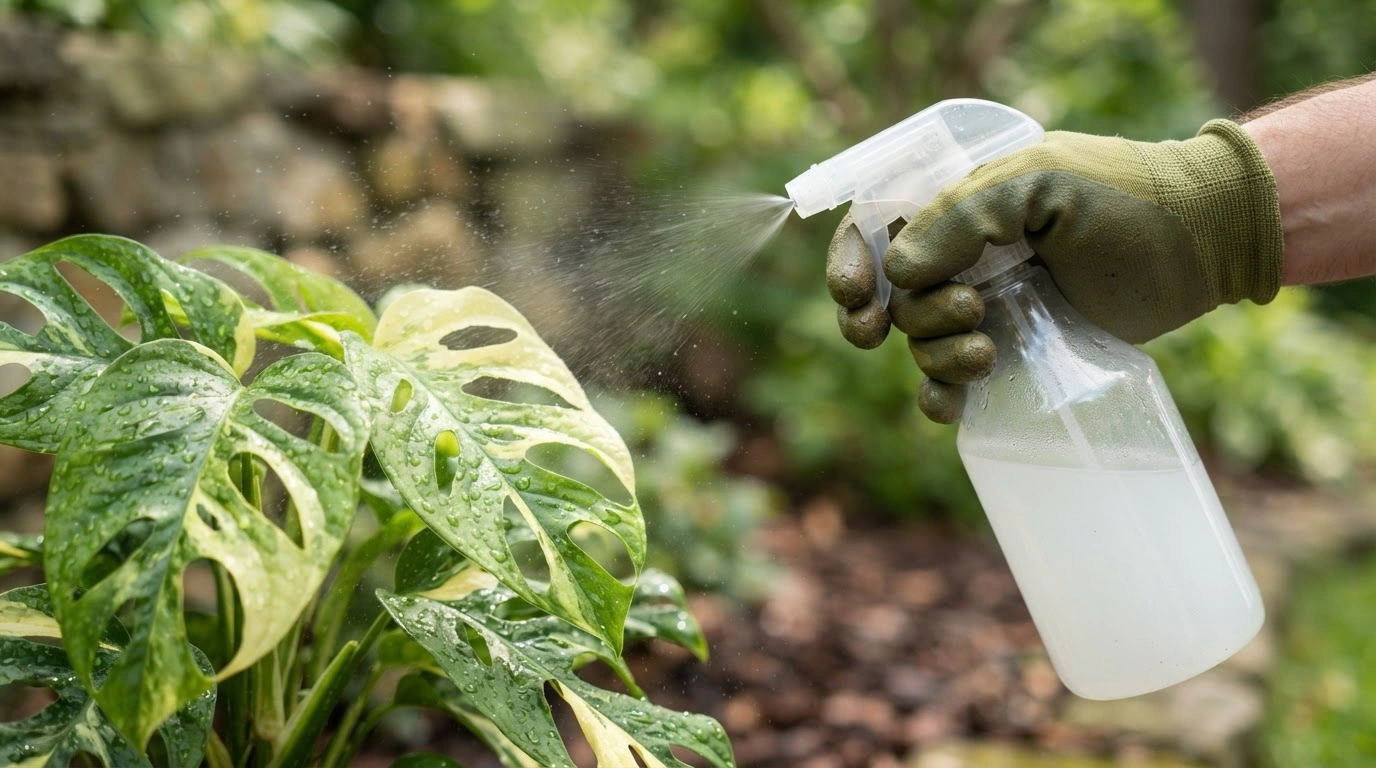
You must know how to use milk appropriately so that it does not destroy your plant. Here are the steps to follow.
Step 1:
Mix milk and water in equal amounts (50-50 ratio) and fill it into a spray bottle. The ratio can vary, which means you can even use the last drop of milk in the jug.
Step 2:
Spray the milk solution directly on the leaves and also pour some of it into the soil.
Step 3:
Check 30 minutes after pouring the solution to see whether the leaves have completely absorbed the milk or not. If you notice milk droplets on the leaves, you must wipe them away to avoid moisture-laden fungal infestations.
Step 4:
You can use a garden hose sprayer in case of a huge garden of 20 by 20 feet to 1 acre. One quarter of a gallon of milk is just enough to milk a 20-20 foot garden, whereas 5 gallons of milk is sufficient for one acre of garden.
Step 5:
Do not use any fertilizer immediately after using milk, as the chemicals will kill the good bacteria found in milk, responsible for your plant’s healthy growth.
You must follow a proper routine of applying milk once a week or every 10 days to avoid any side effects such as rotting of leaves or clogging pores. However, you can reapply milk in case of heavy rain.
Which Milk Type is Beneficial for Plants?
You can use any animal milk for your plants, including cow, goat, or sheep. It does not matter whether it is fresh, expired, or even in powdered form, but it should be diluted. You can think about alternative or vegan options such as oat and almond, but these will not be as nutritious as animal milk. Whatever animal milk you use, you must ensure you dilute it well with water. Also, you must use low-fat or reduced-fat milk instead of whole or skimmed milk.
Side Effects of Using Milk on Plants
Milk benefits your plants in different ways only when it is used in the right amount. Excess use of milk on plants can lead to several side effects.
Damage to Plants
When excessive milk is used, the bacteria in milk can hinder growth and make the leaves wilt.
Bad Odor
The use of whole-fat milk will cause a bad odor in the plant and nearby soil. Similarly, skimmed milk can cause soft and black rot.
Not a Permanent Cure
Milk can be used to cure powdery mildew in plants. But it is not a permanent cure. Milk stops or slows down the infestation for a week or 10 days, after which you will have to reapply it.
Milk on Plants vs Plant Fertilizer
Many garden owners mistake milk for a proper fertilizer. However, in reality, milk differs from a plant fertilizer in various ways.
| Factors | Milk | Plant Fertilizer |
| Plant Growth and Improvement | Milk has only 0.5% nitrogen, which is quite low for plant growth | Plant fertilizers are always a perfect way to boost plant growth and improvement |
| Organic Matter | Milk is organic, and adding fresh milk to plants can invite roaches, mold, and fungus. | Fertilizer is free from such organic matter. Hence, there is no risk of mold or other such problems. |
| Price | Milk is much more expensive than composted manure or other fertilizer | You can easily get nitrogen fertilizer in a few bucks. |
Common Mistakes to Avoid When Using Milk on Plants
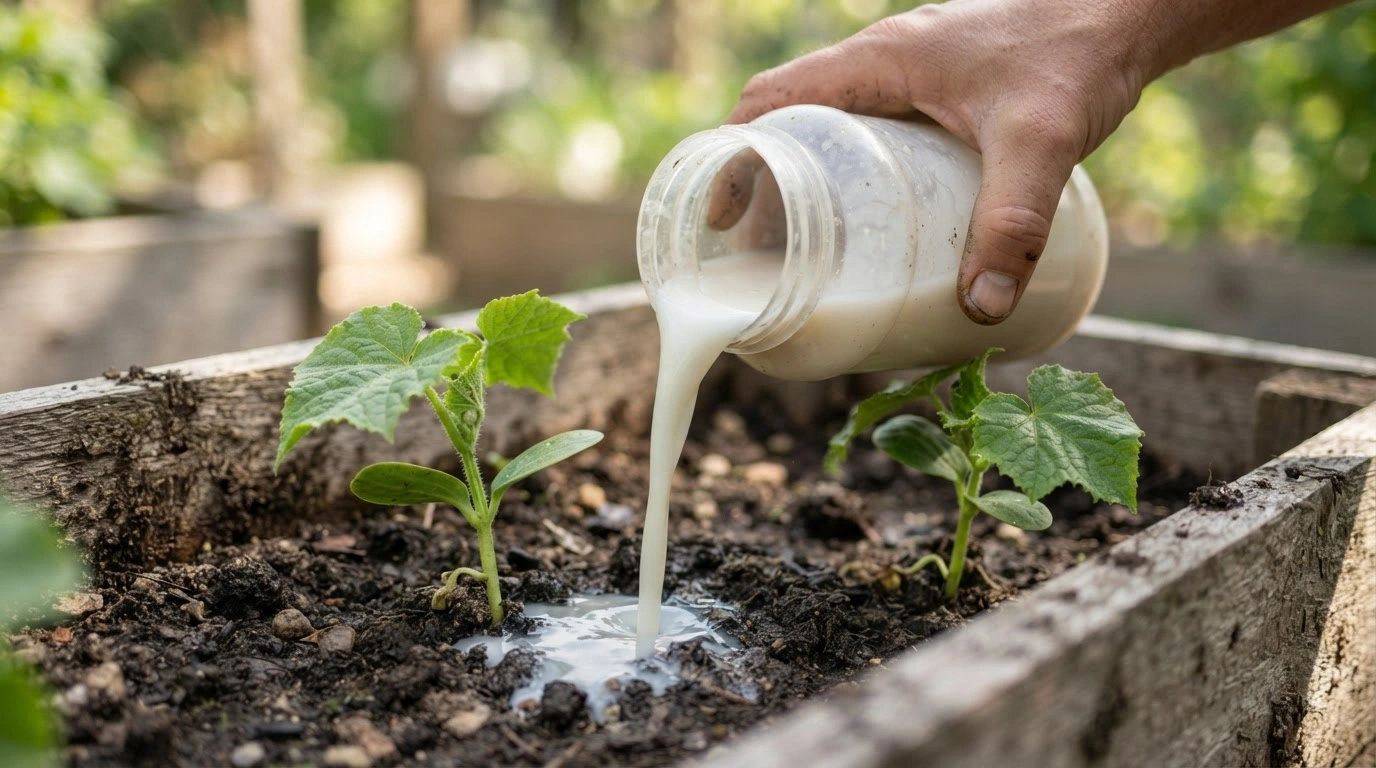
Using milk on plants has its set of benefits along with side effects. So, you must use milk on plants responsibly and must avoid a few of the common mistakes.
Using Full-Fat Milk
One of the major mistakes that you must avoid is the use of full-fat milk. The fat in milk can block the plant pores, making it difficult for the plant to get enough sunlight to perform photosynthesis. Always dilute milk with water when you are using it on plants and soil.
Not Considering Humidity
You must always check humidity before spraying milk on plants. Avoid spraying during humid weather or in the evenings, as excessive moisture will lead to fungal diseases.
Spraying on Indoor Houseplants
Often, spraying milk on indoor houseplants can lead to a sour odor. Thus, you must always spray the plant outdoors, let it dry, and then bring it back indoors.
Should You Put Milk on Your Plants?
The calcium-rich beverage milk is known for its nutritional value for plants as well. It is known to offer solutions for mild powdery mildew and related issues. However, the fact is that using milk will be extremely expensive for treating powdery mildew compared to other solutions like using neem oil. Therefore, the use of an alternative method like neem oil is affordable and worth it. If you have expired milk, you can use it in the garden soil or dilute it to spray on the plants.